If you buy through our links, Amazon pays us a small commission at no extra cost to you. That’s how we keep the site running. How we choose.
Contents
Pickleball has a reputation as a gentle sport, and in many ways it is: the court is small, the paddle is light and you don't cover huge distances. That doesn't mean it's risk-free, though. Plenty of people start after years without exercise, play for hours on end in their first week and dive for balls they'll never reach. The result is a set of fairly predictable injuries that, fortunately, are largely avoidable.
In this guide we go through the most common injuries, why they happen, what you can do to lower the risk, and a 10-minute warm-up that fits before any game.
Disclaimer: this guide offers general prevention tips, not medical advice. If you have persistent pain, swelling, loss of strength, or you've taken a hit or a fall, see a doctor or physical therapist. Don't keep playing through pain.
The most common pickleball injuries
Falls while backpedaling
This is the most typical accident and the most avoidable one. An opponent throws up a lob, the player runs backward watching the ball, their feet tangle and they fall straight back. They land on a hand or hit their head, hip or wrist. The risk is higher for older players and on courts with little room behind the baseline.
Ankle sprains
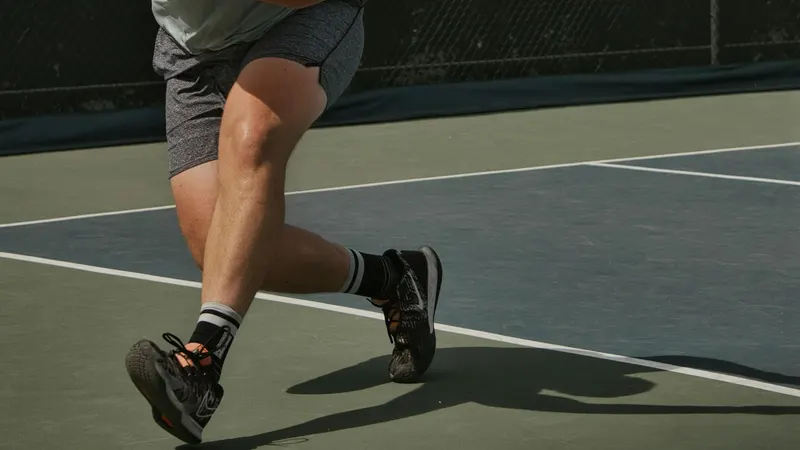
Quick changes of direction, lateral pushes and stepping on a loose ball are the usual causes. Running shoes, with their soft, high soles, make lateral stability worse.
Pickleball elbow (lateral epicondylitis)
It's the same problem as "tennis elbow": pain on the outside of the elbow from overloading the forearm tendons. It often shows up after playing for many hours at once, squeezing the paddle too hard, using the wrong grip size or a paddle that's too heavy for your fitness, and hitting with the wrist instead of the shoulder.
Shoulder
Repeated overheads and serves on top of unconditioned muscles can overload the rotator cuff. It's more common in players who go from doing nothing to playing every day.
Calf and Achilles tendon
Explosive starts toward the net without warming up are the classic setup for a calf strain or Achilles trouble. It mainly affects players over 40.
Eye impacts
In fast exchanges at the net, players are only a few feet apart and the ball can reach your face before you can react. A pickleball is hard and just the right size to hit the eye socket.
How to prevent injuries
- Never backpedal after a lob. Turn your body and shuffle or use crossover steps, or let your partner take it. Losing a point beats taking a fall.
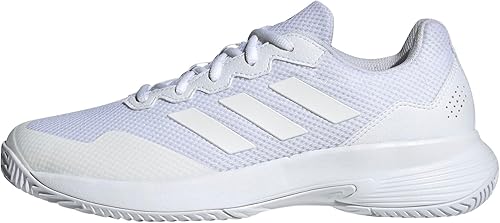
- Wear court shoes. Pickleball shoes or tennis shoes have flat soles and lateral support; running shoes aren't built for side-to-side movement.
- Always warm up. Ten minutes is enough (see the table below).
- Choose the right paddle. A midweight paddle, 7.3 to 8.3 oz (207-235 g), is a good starting point; if your elbow or shoulder bothers you, a lighter paddle reduces the load. We cover it in how to choose a paddle.
- Get the grip size right. A handle that's too thin makes you squeeze harder. An overgrip builds it up slightly and adds tack.
- Protect your eyes. Protective sports eyewear is a sensible precaution, especially in doubles and when you play close to the net.
- Clear stray balls from your side of the court before the next point.
- Build up gradually. Increase your playing time step by step and leave rest days between hard sessions.
- Stay hydrated and avoid the hottest hours in summer.
A 10-minute warm-up routine
The goal is to raise your body temperature, mobilize the joints that work hardest and wake up the muscles before asking them for explosive efforts. You don't need any equipment, just the court and your paddle.
| Minute | Exercise | What it does |
|---|---|---|
| 0-2 | Brisk walk or easy jog around the court | Raises heart rate and temperature |
| 2-3 | Ankle, knee and hip circles | Leg mobility |
| 3-4 | Shoulder and arm circles, trunk rotations | Upper-body mobility |
| 4-5 | Wrist circles, opening and closing the hands | Prepares forearm and elbow |
| 5-7 | Side shuffles, crossover steps and small hops | Activates calves and legs |
| 7-8 | Gentle lunges and partial squats | Activates quads and glutes |
| 8-10 | Soft dinks at the net and slow volleys | Warms up with the real movement |
Tip: before playing, choose dynamic mobility over long static stretches. Save gentle, held stretches for after the game, when your muscles are already warm.
Paddle, grip and gear that go easy on your body
| Item | What to look for | Why |
|---|---|---|
| Paddle | Light or midweight (under 8.3 oz / 235 g) | Less load on elbow and shoulder |
| Core | Polymer, 14-16 mm thick | Softer, absorbs vibration |
| Grip | 4 to 4.5 in circumference (10-11.5 cm), to fit your hand | Prevents over-squeezing |
| Shoes | Flat sole, lateral support | Stable footwork |
| Eyewear | Sports glasses with polycarbonate lenses | Impact protection |
For starters, beginner paddles usually have a moderate weight, a polymer core and a big sweet spot. A quick grip-size check: when you hold the handle, the index finger of your other hand should fit between your fingertips and the base of your palm.
Common mistakes that lead to injuries
- Starting "cold", jumping straight into a game.
- Playing three or four hours straight in your first week.
- Running backward to chase lobs.
- Playing in running shoes or street sneakers.
- Playing through pain "just to finish the game".
- Buying the heaviest paddle because you think it means more power.
When to stop and get checked
Stop and see a healthcare professional if you feel sharp pain or a pop, swelling, loss of strength, pain that doesn't improve within a few days, or any hit to the eye or head. If you have a pre-existing condition (heart, joint or other issues), talk to your doctor before you start or ramp up. If you're older or returning to sport after a long break, you may also like our guide to pickleball for seniors.
Remember that pickleball is a game: most aches can be avoided with common sense, good gear and a short warm-up. All shoes and protective gear are grouped under shoes and apparel.
Recommended gear for this guide


Frequently asked questions
What is the most common pickleball injury?
Among the most frequent are falls from backpedaling after a lob, ankle sprains, tennis or pickleball elbow and calf strains. Many of them can be prevented with a warm-up, proper court shoes and good technique.
How long should I warm up before pickleball?
About 10 minutes is usually enough: joint mobility, side shuffles, some leg activation and a few minutes of soft dinks and volleys before the game starts.
Can you get tennis elbow from pickleball?
Yes. It's often called pickleball elbow and is linked to overloading the forearm tendons. A lighter paddle, the right grip size, a looser hold and fewer hours on court can help. If the pain persists, see a healthcare professional.
Do I need eye protection for pickleball?
It isn't required, but protective sports eyewear is a sensible precaution, especially in doubles and during fast exchanges at the net, where the ball can reach your face.
What shoes help prevent pickleball injuries?
Court shoes such as tennis or pickleball shoes, with a flat sole and lateral support. Running shoes have a high, soft sole and offer little stability for side-to-side movement.