If you buy through our links, Amazon pays us a small commission at no extra cost to you. That’s how we keep the site running. How we choose.
Contents
The kitchen is pickleball's signature rule and the one that confuses new players the most. Its official name is the non-volley zone, which sums it up: while you're in it, you can't hit the ball out of the air. This guide covers exactly what the kitchen is, why it exists, what's allowed and what isn't, the most common faults and how to use it to win points.
The rule in one sentence: you can be in the kitchen whenever you like, but you can't volley (hit the ball before it bounces) while touching the kitchen or its line, and your momentum from a volley can't carry you into it.
What the kitchen (non-volley zone) is
It's the area next to the net, 7 ft (2.13 m) deep on each side and the full 20 ft width of the court. The line that marks it is part of the kitchen: stepping on it counts the same as stepping inside. You can see how it fits into the rest of the court in our guide to pickleball court dimensions.
One key point: the rule isn't about airspace, it's about the player. What matters is where you are (your feet, body, paddle, clothing) when you volley, not where the ball is. You can volley a ball that's directly above the kitchen as long as your feet are outside it.
Why the rule exists
Without the kitchen, pickleball would be pretty dull: on a small court with a low net, you could just camp at the net and smash anything that came over a little high. The non-volley zone forces you to keep some distance from the net when you volley, and that creates the most interesting part of the game: the soft, precise exchanges at the net called dinks, where patience and control beat raw power. It's a big reason players of all ages can compete together.
What's legal and what isn't
| Situation | Legal? |
|---|---|
| Volleying with both feet outside the kitchen, even if the ball is above it | Yes |
| Volleying with a foot on the kitchen line | No, fault |
| Stepping into the kitchen to hit a ball that has bounced | Yes |
| Staying in the kitchen between shots | Yes, but you can't volley until you get out |
| Volleying just behind the line, then momentum carries you into the kitchen | No, fault, even if the rally is already over |
| Your paddle or hat falling into the kitchen after a volley | No, fault |
| Your partner standing in the kitchen while you volley from outside | Yes, as long as you don't touch |
| Your volley momentum makes you bump your partner while they're in the kitchen | No, fault |
| Jumping from outside, volleying in the air and landing in the kitchen | No, fault |
| Your paddle crossing over the kitchen during a volley | Yes, if you don't touch it |
The momentum rule
This one surprises people most. The act of volleying doesn't end when the ball leaves your paddle: it includes the swing, the follow-through and the momentum that carries you. If you volley with your toes just behind the line and then step forward into the kitchen, it's a fault. It doesn't matter if your opponent already missed the ball; the fault stands. To volley again after entering the kitchen, you must re-establish both feet outside first.
Entering after the bounce
The kitchen isn't off-limits; only volleying from it is. If your opponent drops a short ball that bounces in the kitchen, step in, hit it after the bounce, and get back out quickly so you're not stuck if the next ball comes in the air.
The serve and the kitchen
The serve must clear your opponent's kitchen: if it lands inside or on the kitchen line, it's a fault. Don't forget the two-bounce rule, which requires the return and the third shot to bounce; we cover it in our pickleball rules guide.
Common kitchen faults
- Toe on the line: crowding the line so closely that the tip of your shoe touches it when you volley. Stand a few inches back.
- One step too far after a high volley: you reach for a volley, your weight goes forward and your foot lands inside.
- Volleying with one foot still in: after a dink pulls you in, your opponent speeds one up and you volley before getting out.
- Grabbing your partner: in doubles, steadying yourself on a partner who's in the kitchen after a volley.
- Dropping your paddle or anything else into the kitchen during a volley.
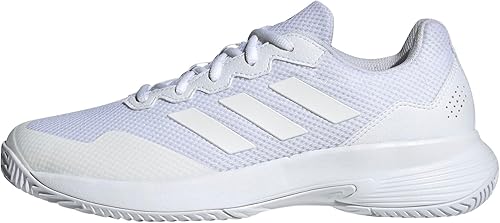
Watch out: in rec games without a referee, each player calls their own kitchen faults. If you're not sure whether you touched the line, the sporting thing is to call it on yourself. Pickleball shoes with good lateral grip help you stop without sliding onto the line.
Strategy: how to play around the kitchen
The kitchen isn't just a restriction; it's the heart of pickleball tactics. In doubles, the team that gets to the kitchen line first and stays there wins most of the points.
- Get to the line early: after the return, move up until you're a few inches behind the kitchen line. The serving team needs the third shot (often a soft "third shot drop") to earn its way forward.
- Ready position: feet parallel behind the line, knees bent and paddle out in front at chest height. That lets you block without stepping forward.
- The dink: a soft shot that lands in your opponent's kitchen. Because it bounces so close to the net, they can't attack it and have to hit up. The goal is to stay patient until someone pops a ball up.
- Only attack balls above the net: if it's low, dink it back. If it's high, that's your chance to volley firmly at your opponent's feet.
- Go crosscourt: crosscourt dinks travel over the lowest part of the net and give you more margin.
For touch at the net, a paddle with good feel helps, like those with a carbon fiber face. To work on the technique behind each shot, see our guide to basic pickleball shots.
Examples to make it click
- Volley with a foot on the line: you're at the net, your opponent hits a ball at waist height and you volley it, but your heel is on the line. Fault, point to your opponents.
- Legal volley, stay put: you volley with both feet outside, the ball is a winner and you hold your position. Legal point.
- Overhead and stumble: you smash from behind the line, your opponent never touches it, and your momentum carries you into the kitchen. Fault, even though the ball was already dead.
- Dink that bounces in: your opponent drops a short dink, you step into the kitchen, return it after the bounce and step back out. All legal.
- Volley from outside the court: the ball comes wide, you're outside the sideline next to the kitchen without touching it, and you volley. Legal: you never touched the kitchen.
Once these cases are clear, the kitchen stops being confusing and becomes your best friend. Brush up on the rest of the basics in what is pickleball.
Recommended gear for this guide


Frequently asked questions
Can you go into the kitchen in pickleball?
Yes. You can enter the kitchen at any time and hit any ball that has bounced while you're in it. What you can't do is volley, meaning hit the ball out of the air, while touching the kitchen or its line.
Is the kitchen line part of the kitchen?
Yes. The line belongs to the non-volley zone, so volleying with a foot on it is a fault. The same goes for the serve: a serve that lands on the kitchen line is a fault.
What is the momentum rule in pickleball?
If your momentum after a volley carries you into the kitchen, or something you're wearing or carrying falls into it, it's a fault even if the rally has already ended. To volley again after entering the kitchen, you must get both feet back outside first.
How big is the pickleball kitchen?
The kitchen is 7 ft (2.13 m) deep on each side of the net and spans the full 20 ft width of the court, including the line.
Can my partner be in the kitchen while I volley?
Yes, as long as you're outside the kitchen and don't touch your partner during the volley. If your momentum makes you bump into them while they're in the kitchen, it's a fault.