If you buy through our links, Amazon pays us a small commission at no extra cost to you. That’s how we keep the site running. How we choose.
Contents
carbon fiber pickleball paddles comparison, in stock
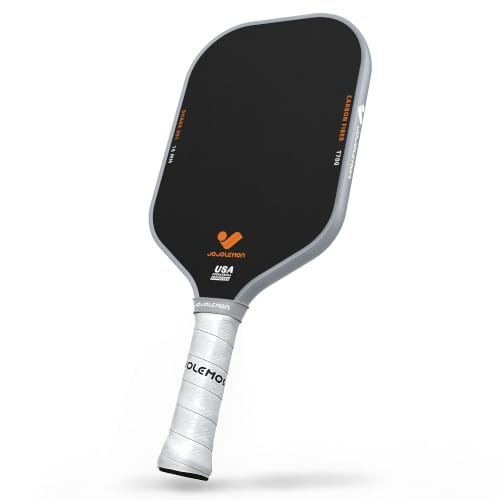
JOJOLEMON Pickleball Paddles, Carbon Fiber Pickleball Paddle with a 16mm Shark Power Polymer Core, The Pickleball…

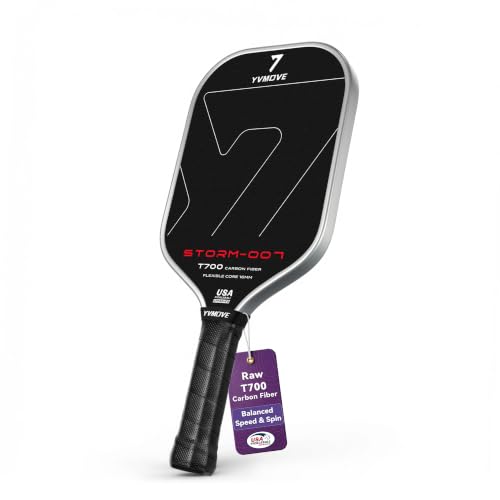
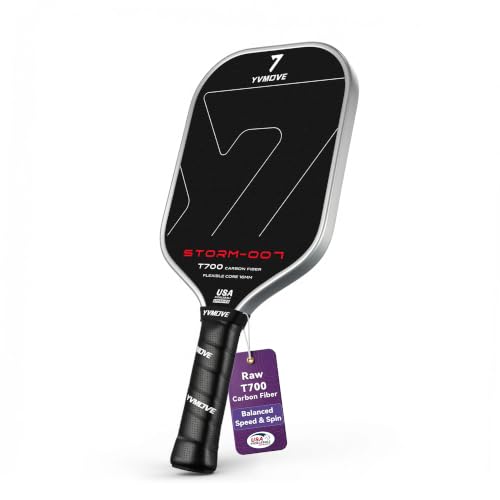


What a carbon fiber face adds
Carbon fiber is stiffer and lighter than fiberglass. On a pickleball paddle, that means a face that flexes less at contact: the ball comes off with a more predictable response and you can feel exactly where you hit it. The result is more control and better feel, which is exactly what matters in the soft game at the kitchen line, in dinks, resets and blocks.
The trade-off is that a carbon face gives you a bit less "free" power than fiberglass, so your drives depend more on technique. That is why carbon appeals mostly to players who already control the ball and want precision, not to someone picking up a paddle for the first time.
Raw carbon, T700 and other finishes
- Raw carbon: the fiber is left exposed, with no thick layer of paint or clear coat. Its natural texture grips the ball and helps you generate spin on serves, topspin drives and slices.
- T700: a high-strength carbon fiber grade widely used in mid-range and premium paddles. If a listing says "T700 raw carbon," the face is raw carbon of that grade.
- Woven or glossy carbon: still carbon, but with a smoother top layer; it adds control and stiffness with less grip than raw carbon.
- Graphite: a form of carbon in very thin, light sheets; it usually gives good touch at a modest weight.
Tip: be wary of listings that just say "carbon" with no details. Look for the face type (raw carbon, T700, graphite), the core thickness and the actual weight: those are the specs that let you compare.
Thermoformed paddles: what changes
In a thermoformed paddle, the face, edge and core are molded together under heat and pressure, and the perimeter is usually sealed with foam. The result is a one-piece paddle with a stiffer edge, a sweet spot that feels larger and more pop than a traditional carbon paddle of the same thickness.
Thermoformed paddles usually sit at the premium end. They make sense if you play a lot and want to combine control and power; if you play rec games a couple of times a week, a traditional carbon paddle with a 16 mm core is plenty.
Fiberglass vs carbon vs raw carbon
| Face | Power | Control and feel | Spin | Best for |
|---|---|---|---|---|
| Fiberglass | high and easy | medium | medium | beginners and casual play |
| Smooth or woven carbon | medium | high | medium | players who want precision |
| Raw carbon (T700) | medium | high | high | regular players who use spin |
| Thermoformed carbon | medium-high | high | high | intermediate to advanced players |
When a carbon paddle is worth it
A carbon paddle pays off when you play several times a week, already have a reliable dink and return, and feel your current paddle will not let you place the ball precisely or put spin on it. It is also a good move if you come from tennis or padel with solid technique. If you are just starting, a fiberglass paddle is the better choice: see our beginner paddles.
On specs, the most versatile combination is midweight (7.3-8.3 oz), a 16 mm polymer core and a standard shape. Elongated carbon paddles add reach and power but demand more precision. To compare carbon with other face materials, check our main guide to the best pickleball paddles.
Approval for sanctioned play
If you play tournaments, your paddle must be on the USA Pickleball approved paddle list. The rules require a rigid surface with no holes or textures that create artificial spin, and they set limits on surface roughness and deflection, which matters especially for raw carbon faces. Check the exact model on the official list, because paddles are reviewed and a model can be removed. For casual play you do not need the seal.
Common mistakes and care
- Buying carbon as a beginner and expecting it to fix your game on its own.
- Trusting a very cheap "carbon" paddle with no face or core details.
- Assuming the spin lasts forever: raw carbon texture wears down with use.
- Scraping the edge on the court: protect it with edge guard tape.
Heads up: clean the face with a damp cloth and no abrasive products, and never leave your paddle in a hot car: heat can damage the core and adhesives.
We compare spec sheets, the official rules and verified reviews, but we do not physically test the products. Use the models above as a starting point and always confirm the face type, thickness and approval status on each listing.
Frequently asked questions
What are the benefits of a carbon fiber pickleball paddle?
More control, better feel and, with a raw carbon face, more spin. The trade-off is a bit less easy power than fiberglass, so carbon suits players who already have solid technique.
What does T700 mean on a pickleball paddle?
T700 is a high-strength carbon fiber grade widely used in mid-range and premium paddles. When a paddle says T700 raw carbon, the face is that carbon with no finishing layer, which helps generate spin.
What is a thermoformed pickleball paddle?
A paddle whose face, edge and core are molded together under heat and pressure, usually with a foam-sealed perimeter. It typically offers a larger sweet spot and more pop than a traditional carbon paddle.
Can I use any carbon paddle in a tournament?
No. For sanctioned play the paddle must be on the USA Pickleball approved list, which checks surface roughness and deflection among other things. Check the exact model on the official list before your event.
You may also like
- ComparisonPickleball paddlesPickleball paddles compared for beginners and advanced players: fiberglass vs carbon fiber, weight and shape. See which one suits your game best.
- ComparisonPickleball paddles for beginnersYour first pickleball paddle, minus the mistakes: mid weight, 16 mm core and fiberglass face, with models in stock on Amazon. Compare and pick yours today.
- GuideHow to Choose a Pickleball Paddle: Weight, Core and GripChoose a pickleball paddle without the guesswork: weight, 13 vs 16 mm core, carbon or fiberglass face, shape and grip size, plus a checklist for your profile.
- ComparisonCheap pickleball paddlesBudget pickleball paddles without the surprises: fiberglass vs wood, what wears out first and red flags to check before you buy. Spend less, but choose well.
- ComparisonPickleball edge guard tapeEdge guard tape for pickleball paddles: protects the rim from scuffs, how much weight it adds and how to apply it step by step. Make your paddle last longer.
- GuideBasic Pickleball Shots: Dink, Drive, Volley and Third ShotThe basic pickleball shots made simple: grip, return, drive, third shot drop, dink and volley, with a table of when to use each one and drills to practice.
- GuidePickleball vs Tennis: Court, Gear, Rules and Play ComparedPickleball or tennis: differences in court and net, paddle and ball, serve, scoring, effort and learning curve, with a table and tips for tennis players.
- GuidePickleball Kitchen Rules Explained, with ExamplesWhat the kitchen (non-volley zone) is in pickleball, what is and is not allowed, the most common faults and how to play around it, with clear examples.