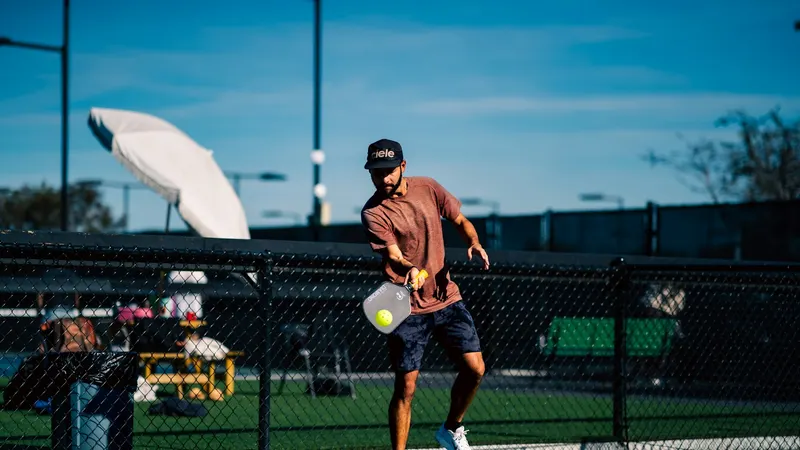
If you buy through our links, Amazon pays us a small commission at no extra cost to you. That’s how we keep the site running. How we choose.
Contents
Padel is huge in Spain and much of Latin America, and it is slowly showing up in US clubs, often right next to new pickleball courts. Both sports are mostly played as doubles, with solid paddles on small courts, so people tend to lump them together. They share the social vibe and fast hands at the net, but the rules, the gear and the way you win a rally are very different. Here are all the differences, a side-by-side table and practical tips if you are coming from padel.
Quick take: padel is played inside walls with a perforated paddle, a pressurized ball and tennis scoring. Pickleball has no walls, a smaller court, a solid paddle, a perforated plastic ball, an underhand serve, a non-volley zone (the kitchen) and games to 11 where only the serving side scores.
Comparison table: pickleball vs padel
| Feature | Pickleball | Padel |
|---|---|---|
| Court | 20 × 44 ft (6.10 × 13.41 m), no walls | About 33 × 66 ft (10 × 20 m), enclosed by glass walls and mesh |
| Net | 36 in (91.4 cm) at the sidelines, 34 in (86.4 cm) at center | About 36 in (92 cm) at the sides, 34.6 in (88 cm) at center |
| Paddle | Solid, smooth face; length + width ≤ 24 in, length ≤ 17 in | Perforated face with a frame and an EVA or foam core |
| Paddle weight | Typically 7.3-8.3 oz (207-235 g) for midweight | Typically 12-13.4 oz (340-380 g) |
| Ball | Perforated plastic, 0.78-0.935 oz, low bounce | Pressurized felt ball, similar to a tennis ball |
| Serve | Underhand, crosscourt, one attempt; drop serve also legal | Underhand after a bounce, crosscourt, two attempts |
| Special zone | Kitchen: 7 ft (2.13 m) on each side of the net, no volleys | None; you can volley right at the net |
| Two-bounce rule | Yes: the return and the third shot must bounce | No |
| Scoring | Games to 11, win by 2; only the serving team scores | Tennis scoring: 15-30-40, games and sets |
| Typical play | Soft dinks at the kitchen line and speed-ups | Lobs, smashes, off-the-wall shots and net play |
The pickleball figures come from the USA Pickleball rulebook. For every line and measurement, see our guide to pickleball court dimensions.
The court: no walls and much smaller
The difference you notice on day one is that pickleball has no walls. If the ball gets past you, the rally is over: no playing it off the glass, no recovering from the back wall. You have to position yourself better and make decisions earlier.
A pickleball court is 20 × 44 ft (6.10 × 13.41 m), the same as a doubles badminton court, compared with roughly 33 × 66 ft for padel. It is much narrower, so each player covers less ground side to side, but there are also fewer places to hide the ball. A pickleball court fits inside a padel court, although the walls cut into the safety space around it, so some clubs lay down temporary pickleball lines on padel courts for open play.
The net is about the same height in both sports, but pickleball adds a zone padel doesn't have: the kitchen, or non-volley zone, a 7-ft strip on each side of the net.
Paddle and ball: completely different gear
The paddle
A padel paddle (often called a racket) has holes, a thick frame and a rubbery core. A pickleball paddle is solid, hole-free, thinner and much lighter: usually a polypropylene honeycomb core of 13-16 mm with a fiberglass or carbon fiber face. The rules cap its size (length plus width up to 24 in, maximum length 17 in) and ban textured surfaces that create artificial spin. You can't play pickleball with a padel paddle.
If you come from padel, a midweight 7.3-8.3 oz paddle will feel feather-light. That's normal. For core, shape and grip differences, read our guide on how to choose a pickleball paddle.
The ball
A padel ball is pressurized and covered in felt; it bounces high and fast. A pickleball is hard perforated plastic, weighs 0.78-0.935 oz and bounces much lower. It slows down in the air and doesn't sit up after the bounce, so raw power matters less and placement matters more. Outdoor balls have about 40 small holes and handle wind better.
Serve, kitchen and scoring
The serve
Both sports serve underhand and crosscourt, but the details differ. In pickleball you must make contact below the waist with an upward paddle arc and at least one foot behind the baseline; a drop serve is also allowed. You get one attempt, and a serve that clips the net and lands in the correct box stays in play. The serve also has to clear the kitchen: landing in it or on its line is a fault. We break it down step by step in how to serve in pickleball.
The kitchen and the two-bounce rule
In padel, taking the net and volleying is almost always the right call. In pickleball you also want to be up front, but you can't volley while touching the kitchen or let your momentum carry you into it. That's where the dink comes from: a soft shot that drops into your opponents' kitchen so they have to hit up. Add the two-bounce rule: the return and the third shot must bounce, so the serving team can't rush the net right away.
Scoring
Forget 15-30-40. In traditional pickleball scoring only the serving team scores, and games go to 11, win by 2. In doubles you call three numbers (server's score, receiver's score and server number) and the game starts at "0-0-2." It's confusing at first; our guide to pickleball scoring sorts it out in five minutes.
Physical demand, learning curve and cost
- Physical demand: both are tough at a high level, but pickleball has fewer long sprints and fewer overheads. The light paddle and slow ball are easier on the shoulder. Padel asks for more rotation, jumping and smashing.
- Learning curve: beginners rally in pickleball within the first hour. Padel is approachable too, but mastering the walls takes time. On the other hand, the patience of the kitchen game is harder than it looks.
- Cost: a midrange pickleball paddle usually costs less than a comparable padel paddle, and balls last a while. Courts are easy: with a portable net and line tape you can play in a gym, a driveway or on a tennis court. Padel requires a dedicated walled court.
Which sport suits you?
Padel suits players who love wall play, smashes and a fast, physical doubles game, if there is a court near you. Pickleball suits people looking for something social, with lots of rallies, less joint impact and courts that are easy to find or set up on any flat surface. It's popular with players over 50, families and tennis or padel players looking for a change. They aren't mutually exclusive: plenty of people play both.
Tips for padel players switching
- Forget the wall: a ball that passes you is a lost point. Move back earlier and play more groundstrokes.
- Own the kitchen line: get up to it, but don't touch it when you volley. Read the kitchen rule before your first match.
- Fewer lobs: on a short court with no walls, a lob is risky; the plastic ball doesn't carry far and sits up for an overhead.
- Shorter swings: the paddle is light and the ball isn't pressurized. Compact your stroke and keep a firm wrist.
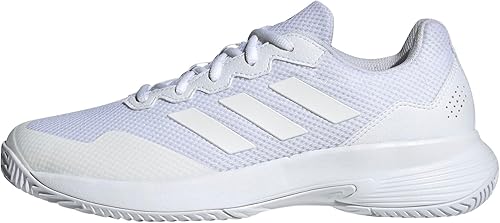
- Court shoes: padel shoes with herringbone soles for artificial turf aren't ideal on hard courts; choose court shoes with solid lateral support.
Common mistake: trying to win every point with power, padel-style. In pickleball, speeding up a low ball usually hands your opponents an easy volley at the net. Wait for a high ball and work on your dink.
Common mistakes when switching
- Serving above the waist or with a sidearm padel motion: that's a fault.
- Rushing the net right after serving and ignoring the two-bounce rule.
- Stepping on the kitchen line while volleying.
- Calling the score like padel or tennis.
- Using a heavy paddle or an indoor ball outdoors.
To start on the right foot, check our roundups of beginner paddles and outdoor balls.
Recommended gear for this guide


Frequently asked questions
Can you play pickleball on a padel court?
Yes. A pickleball court is 20 by 44 feet and fits inside a padel court, which is about 33 by 66 feet. Mark the lines and use a portable net or lower the net to 34 inches at center. The walls reduce the safety space, but it works fine for recreational play.
Can I use my padel paddle for pickleball?
No. A padel paddle has holes and dimensions that don't meet pickleball rules, and the plastic ball doesn't respond the same way. You need a pickleball paddle, which is solid, thinner and lighter.
Is pickleball easier than padel?
Beginners usually rally more easily in pickleball because the court is small, the paddle is light and the ball is slow. Playing well still takes patience, dink control and good positioning, like any racket sport.
Which is more tiring, padel or pickleball?
It depends on level, but padel usually involves more running, rotation and smashing. Pickleball has fewer overheads and a lighter paddle, so it's generally considered a bit easier on shoulders and knees.