If you buy through our links, Amazon pays us a small commission at no extra cost to you. That’s how we keep the site running. How we choose.
Contents
Our top 3 picks
Stock checked on October 7, 2026

outdoor pickleball balls comparison, in stock
Franklin Sports X-40 Outdoor Pickleballs - USAP Approved
Franklin Sports X-40 Outdoor Pickleballs - USAP Approved

Franklin Sports X-40 Outdoor Pickleballs - USAP Approved

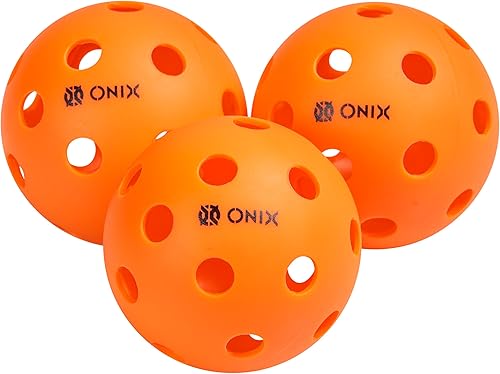
Onix Pickleball Outdoor Balls — Pure 2 and Dura 40 Pack for Durable, High-Performance Play on Outdoor Courts

Onix Pure 2 Outdoor Pickleball Balls Specifically Designed and Optimized for Pickleball Yellow 6-Pack
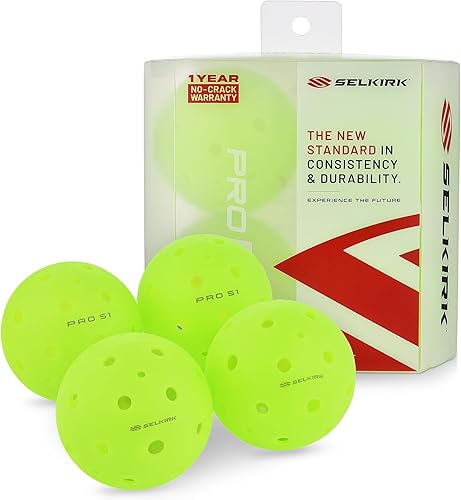
Selkirk Sport Pro S1 Outdoor Pickleballs | USAPA Approved | 4/12/100pk

Magicorange Pickleball Balls,USAPA Approved 40 Holes Outdoor Pickleballs

Magicorange Pickleball Balls,USAPA Approved 40 Holes Outdoor Pickleballs
PickleballPala score: combines the average rating and the number of buyer reviews on Amazon. No brand pays to be featured.
What makes an outdoor ball different
Every pickleball measures 2.87 to 2.97 inches (7.29-7.54 cm) across and weighs 0.78 to 0.935 oz (22.1-26.5 g), but they don't all play the same. An outdoor ball is built for concrete, asphalt or acrylic-coated courts in the open air: it has around 40 small holes, a stiffer plastic shell and a weight toward the top of the range. The result is a faster ball with a livelier bounce and a flight path that drifts less when the wind picks up.
If you play in a gym on hardwood or a sport floor, you want indoor balls instead. For a side-by-side look at both types, read our guide on indoor vs outdoor pickleballs.
How to choose outdoor balls
- Hardness and durability: harder balls play faster but tend to crack sooner, especially in winter. Slightly softer plastic lasts longer and is more forgiving on dinks and resets.
- Seam quality: most balls are made from two halves welded together. A clean, smooth seam with no ridges points to better manufacturing and a more consistent bounce.
- Weight: a heavier ball cuts through wind and hits harder on put-aways; a lighter one gives you a split second more to react.
- Consistent bounce: look for reviews that mention an even bounce all the way around. Cheap balls sometimes have soft spots that send them off at odd angles.
Wind, heat and cold
Wind is the biggest challenge of outdoor play. Small holes and extra weight reduce its effect but don't eliminate it: on gusty days, keep the ball lower and use less spin. Heat softens the plastic slightly, making the ball a touch slower and longer-lasting; cold does the opposite.
Watch the cold: below roughly 50 °F (10 °C) the plastic turns brittle and outdoor balls crack much faster. In winter, store your balls indoors rather than in the car, and warm up with soft rallies for the first few minutes.
Color, pack size and tournament balls
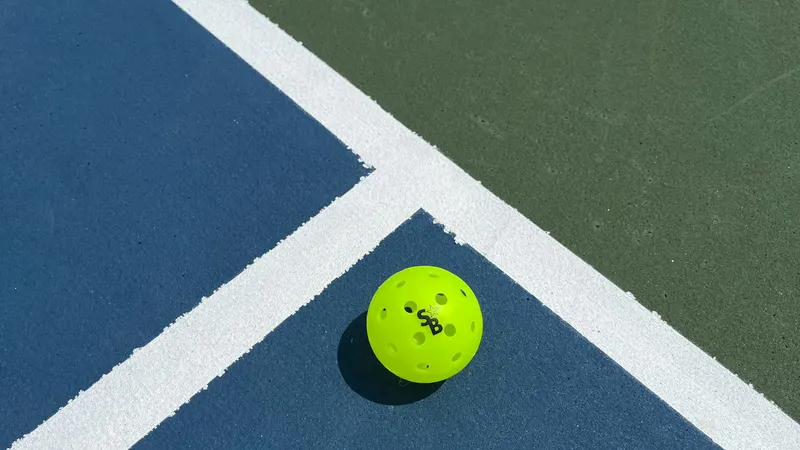
The most common colors are yellow, neon green and orange. Pick whichever contrasts most with the court surface and the background: yellow or neon green works well on blue or green courts, while orange stands out in bright sun or at dusk. What matters is that every player can track it easily.
| Pack | Best for | Notes |
|---|---|---|
| 3-6 balls | Trying a brand | Handy for comparing before you buy in bulk |
| 12 balls | A foursome that plays every week | The most balanced size |
| 24-100 balls | Clubs, coaches, drilling | Lowest cost per ball; ideally all from the same batch |
For sanctioned play, the ball must be on the USA Pickleball approved list. Brands such as Franklin, Onix, Selkirk, JOOLA and HEAD offer outdoor balls with that seal. For rec play it isn't required, but approval usually means a more consistent bounce.
Tip: if you drill with a big bucket of balls, a ball retriever saves you from bending down hundreds of times per session.
Common mistakes when buying outdoor balls
- Using indoor balls outside: in the wind they float around and wear out quickly on concrete.
- Grabbing the cheapest pack without checking reviews for cracking: a ball that splits in a week isn't a bargain.
- Playing on with a cracked or out-of-round ball: the bounce becomes unpredictable and ruins rallies.
- Choosing a color that blends into the court or the lines.
- Leaving balls in the sun or in a freezing trunk for days.
If you're setting up your own court, check the official court dimensions. We compare spec sheets, the rulebook and verified reviews, but we don't physically test the products: always confirm the hole count and outdoor rating on the listing.
Frequently asked questions
How many holes does an outdoor pickleball have?
Usually about 40 small holes. Indoor balls have about 26 larger holes. That design, combined with a harder plastic, helps outdoor balls hold their line in the wind.
Why do outdoor pickleballs crack?
Heavy play on hard courts and, above all, cold weather, which makes the plastic brittle. Storing balls at room temperature and warming up with soft shots extends their life.
What color pickleball is best outdoors?
Whichever contrasts most with your court and background. Yellow and neon green show up well on blue or green courts; orange stands out in bright sun or at dusk.
Do I need tournament-approved balls?
Only for sanctioned events, which require balls on the USA Pickleball approved list. For rec play it isn't mandatory, though approved balls usually bounce more consistently.