If you buy through our links, Amazon pays us a small commission at no extra cost to you. That’s how we keep the site running. How we choose.
Contents
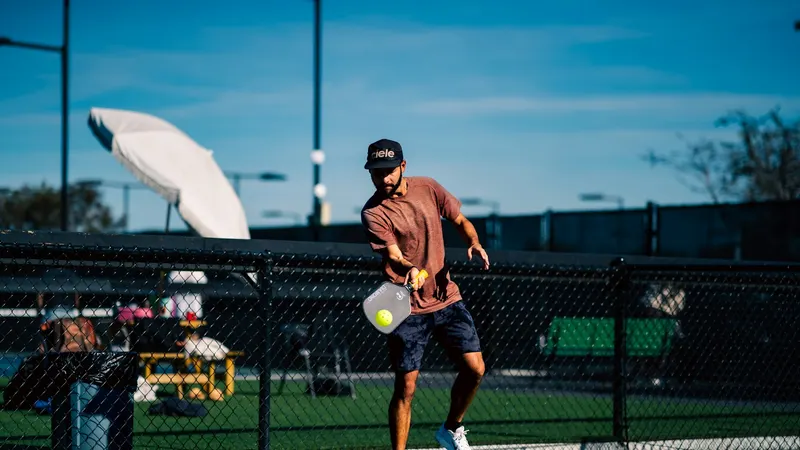
In the US, a lot of pickleball is played on converted or shared tennis courts, and a big share of new players come from tennis. That makes sense: both are built on forehands, backhands, volleys and net play. But pickleball is played on a much smaller court with a solid paddle and a plastic ball, and its strategy rewards patience over power. Here are the differences, a side-by-side table and tips to help a tennis player adapt fast.
Quick take: up to four pickleball courts fit on one tennis court. Pickleball uses an underhand serve with one attempt, a non-volley zone at the net (the kitchen), a two-bounce rule and games to 11. Tennis uses an overhead serve with two attempts and 15-30-40 scoring.
Comparison table: pickleball vs tennis
| Feature | Pickleball | Tennis |
|---|---|---|
| Court | 20 × 44 ft (6.10 × 13.41 m), same for singles and doubles | 36 × 78 ft (10.97 × 23.77 m) for doubles; 27 ft wide for singles |
| Net | 36 in (91.4 cm) at the sidelines, 34 in (86.4 cm) at center | 3.5 ft (1.07 m) at the posts, 3 ft (91.4 cm) at center |
| Zone at the net | 7-ft (2.13 m) kitchen on each side: no volleys inside | None; you can volley right at the net |
| Paddle or racket | Solid paddle, no strings; length + width ≤ 24 in; about 7.3-8.3 oz | Strung racket, much longer; about 10-11.3 oz |
| Ball | Perforated plastic, 0.78-0.935 oz | Pressurized felt ball, about 2 oz |
| Serve | Underhand, contact below the waist, one attempt; net serves play on | Overhead, two attempts; lets are replayed |
| Two-bounce rule | Yes: the return and the third shot must bounce | No: you can volley the return or serve and volley |
| Scoring | Games to 11, win by 2; only the serving team scores | 15-30-40, games and sets; either side scores |
| Typical length | Short games, 15-25 minutes | Matches of an hour or more |
All pickleball measurements follow the USA Pickleball rulebook. If you're adding lines to a tennis court, the details are in our guide to pickleball court dimensions.
Court and net: everything is closer
A pickleball court is 20 × 44 ft, less than a third of the area of a doubles tennis court, which is why up to four fit on one tennis court. In practice, players are much closer together: in doubles, with all four at the kitchen line, there are only about 14 ft between the paddles on each side. Quick hands matter more than a long stride.
The net is similar at center (34 in vs 36 in in tennis) but much lower at the sides: 36 in vs 42 in. If you play on a tennis court with its own net, you'll need to lower it at center or bring a portable net.
Gear: solid paddle and plastic ball
Tennis players notice three things when they pick up a pickleball paddle. First, it's very short: the rules cap the length at 17 in, so the contact point is closer to your hand. Second, it has no strings: the face is solid fiberglass or carbon over a honeycomb core, so the ball comes off with less spin and less depth than off a string bed. Third, it's lighter than a racket, although it can feel stiffer in the hand.
The ball is hard plastic with holes. It isn't pressurized, bounces low and slows down in the air. A heavy topspin forehand doesn't translate: the ball drops sooner and spin is more limited. If you like to play with spin and touch, carbon fiber paddles grip the ball better than fiberglass faces.
Serve and scoring
The serve is the most striking difference. In tennis it's the most powerful shot and can win the point on its own. In pickleball you serve underhand: contact below the waist, an upward paddle arc and at least one foot behind the baseline. You get one attempt, and a serve that clips the net and lands in stays in play. The goal isn't an ace but a deep serve that keeps your opponent back. We cover it in how to serve in pickleball.
Scoring changes too: only the serving team scores, games go to 11, win by 2, and in doubles you call three numbers. Games are short and partners rotate often at open play, which makes the vibe very social. The full breakdown is in pickleball scoring explained.
Physical demand and injury risk
Tennis demands more running, more overheads and more shoulder load from the serve. Pickleball has short movements, no overhead serve and a light paddle, which is why it's popular with people who left tennis because of aches or age. That said, it isn't risk-free:
- Elbow: lateral epicondylitis ("tennis elbow") also shows up in pickleball, especially with heavy paddles or a grip that's too thin or too thick.
- Falls: quick direction changes and backpedaling for a lob cause many injuries, especially among older players.
- Ankles and calves: short, explosive starts load the Achilles tendon.
- Eyes: the plastic ball is hard and can hurt at close range; protective eyewear is a smart idea.
Warming up and wearing court shoes with lateral support cut the risk a lot. More in pickleball injuries and warm-up.
Learning curve
Tennis has a long learning curve: learning to serve and to rally from the baseline can take months. In pickleball, a beginner plays real games in the first session. A tennis player also starts with an edge: reading the ball, positioning, volleys and footwork. The hard part is unlearning: holding back the urge to hit hard and embracing the soft game at the net.
Tips for tennis players switching to pickleball
- Learn the dink: the soft shot into your opponents' kitchen is the foundation of the game. Bend your knees, lock your wrist and push from the shoulder, no backswing.
- Respect the kitchen: get up to the line, but don't volley while touching it or let momentum carry you in. Review the kitchen rule.
- No serve and volley: the two-bounce rule makes you wait for the return. The third shot is often a soft drop (the "third shot drop") so you can move up.
- Shorten your swing: a big baseline forehand sails long on such a short court. Keep strokes compact and out in front.
- Neutral grip: the continental grip you already use for volleys works for almost everything in pickleball.
- Be patient: the winner is whoever attacks the high ball, not whoever hits hardest. Wait for your chance.
Classic tennis-player fault: serving with contact above the waist or with the paddle head above the wrist. That's a fault. Practice a low-to-high motion or use the drop serve, which is easier to keep legal.
Which one should you choose?
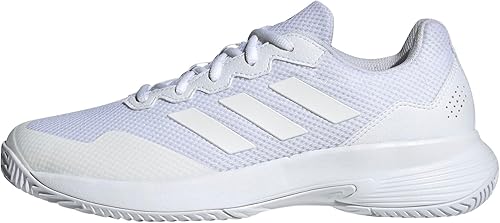
If you want a very physical sport with long matches and a big serve, tennis is still hard to beat. If you want something social, quick to learn, easier on the shoulder, with short games where you're constantly moving, pickleball is a great choice. Many tennis players do both: pickleball sharpens volleys and reflexes, and tennis builds fitness and baseline game. To get started, a good pickleball paddle and court shoes are all you need besides balls.
Recommended gear for this guide



Frequently asked questions
How many pickleball courts fit on a tennis court?
Up to four pickleball courts fit on one tennis court, each 20 by 44 feet. If you only want one, it's usually centered and uses the tennis net lowered to 34 inches at center.
Will a good tennis player be good at pickleball right away?
They have an edge in reading the ball, volleys and footwork, but they need to adapt to the underhand serve, the kitchen and the soft game. Most tennis players become competitive within a few weeks once they learn to dink and stop hitting everything hard.
Is pickleball easier on the elbow than tennis?
The paddle is lighter and there's no overhead serve, so it usually loads the shoulder less. Tennis elbow is still possible, especially with heavy paddles or the wrong grip size, so choose your paddle carefully and warm up.
Can I wear tennis shoes for pickleball?
Yes, and they're one of the best options. Tennis shoes have durable outsoles and good lateral support, which is exactly what pickleball needs on hard courts. Avoid running shoes, which lack lateral stability.