If you buy through our links, Amazon pays us a small commission at no extra cost to you. That’s how we keep the site running. How we choose.
Contents
Our top 3 picks
Stock checked on October 7, 2026
pickleball paddle covers comparison, in stock
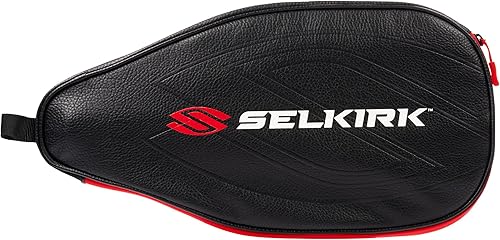
Selkirk Sport SLK Pickleball Paddles Cover | Fits All Shapes and Sizes
Selkirk Sport SLK Pickleball Paddles Cover | Fits All Shapes and Sizes

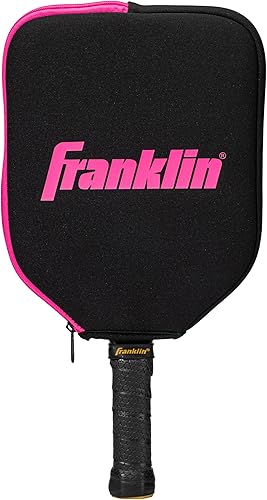
Franklin Sports Pickleball Paddle Cover


Palms-O-Aces Pickleball Paddle Cover for Standard & Elongated Paddles

Palms-O-Aces Pickleball Paddle Cover for Standard & Elongated Paddles

Palms-O-Aces Pickleball Paddle Cover for Standard & Elongated Paddles
PickleballPala score: combines the average rating and the number of buyer reviews on Amazon. No brand pays to be featured.
Why use a paddle cover
A pickleball paddle looks tough, but it has weak spots. The face of a carbon paddle carries a texture (the "grit" on raw carbon faces) that puts spin on the ball, and it wears down with friction: keys, the zipper on your bag, the court surface when you set it down. Edges chip when they get knocked around, and a polymer core does not love a hot car trunk in July.
A cover handles most of that. It prevents scratches in transit, keeps the face clean and dry and, if padded, softens drops. If you have spent real money on one of the carbon fiber paddles, a cover is the best protection per dollar you can buy.
Types of cover: neoprene, padded or hard case
- Neoprene sleeve: the most common option. Thin, light and stretchy, it hugs the paddle and keeps off scuffs and dust. It does little against hard impacts, but it is the most practical choice if the paddle rides inside a bag.
- Padded zip cover: a tough outer fabric with foam padding. More protection, and it usually adds a pocket for balls or keys.
- Hard or semi-hard case (EVA): a molded shell shaped like a paddle. The best protection against impacts and crushing, ideal for flying or tossing the paddle in the car on its own. Bulkier.
- Double cover: holds two paddles, handy if you always bring a backup or play with a partner.
| Type | Protects against | Bulk | Best for |
|---|---|---|---|
| Neoprene | Scuffs and dust | Minimal | Paddle carried inside a bag |
| Padded | Scuffs and light knocks | Medium | Everyday use, with pocket |
| Hard EVA | Impacts and crushing | High | Travel and premium paddles |
Sizing: standard, elongated and widebody paddles
This is the number one mistake. Paddles are not all the same size: a standard paddle is roughly 16 × 8 inches (40.6 × 20.3 cm), while an elongated paddle is about 16.5 × 7.5 inches (41.9 × 19 cm). Many "universal" covers are cut for standard shapes, so an elongated paddle either barely fits or the zipper will not close. Wider widebody shapes can be a problem too.
Measure your paddle's length and width, edge guard included, and compare them with the cover's inside dimensions. If you have added edge guard tape or a thick overgrip, leave some room. For a refresher on paddle shapes, see how to choose a pickleball paddle.
Tip: if you play an elongated paddle, look for covers that say so explicitly or list inside dimensions. "One size fits all" usually means "fits standard".
Features that make a difference
- Ball pocket: fits one or two balls plus keys or a spare overgrip. Great if you walk to the court with just your paddle.
- Soft lining: microfiber or fleece inside will not scratch the face.
- A decent zipper: ideally placed on the side so it does not drag across the face.
- Handle in or out: head-only covers protect less but let a sweaty grip breathe.
- Loop or carabiner: to clip the cover to the fence or your pickleball bag.
Common mistakes
- Buying a standard-size cover for an elongated paddle.
- Zipping a sweaty paddle into its cover for days: the grip breaks down and starts to smell.
- Leaving it in a hot trunk because "it has a cover": neoprene does not insulate against heat.
- Throwing an uncovered paddle into a bag with keys or metal water bottles.
Heads up: no cover prevents wear from actual play. If your face grit is already smooth, a cover will not bring it back; it only slows down wear from transport.
We compare spec sheets, the official rulebook and verified reviews, but we do not physically test the products: always check the inside dimensions on the listing before you buy.
Frequently asked questions
Is a pickleball paddle cover worth it?
Yes, especially for textured carbon paddles. Even a basic sleeve prevents the scratches and friction during transport that wear down the face and edge off the court.
Will a universal cover fit an elongated paddle?
Not always. Many universal covers are cut for standard paddles of about 16 x 8 inches. Elongated paddles are around 16.5 inches long, so check the cover's inside dimensions first.
Neoprene sleeve or hard case?
Neoprene is light and enough if the paddle goes inside a bag. A hard case protects far better against impacts and crushing, so it is the better pick for travel or carrying the paddle on its own.
Can I store my paddle damp in its cover?
Not for long. Wipe it down with a towel and leave the cover open when you get home so the grip does not trap moisture and odors.