If you buy through our links, Amazon pays us a small commission at no extra cost to you. That’s how we keep the site running. How we choose.
Contents
Our top 3 picks
Stock checked on October 7, 2026

pickleball ball retrievers comparison, in stock
Pickleball Picker Upper Ball Holder, Pickleball Ball Picker Hopper Tube, Pickleball Pickup Tube - Lightweight…

VEVOR Tennis & Pickleball Hopper Holds 200/175/150/120 Balls, 3-in-1 Tennis Foldable Pickleball Basket Cart for Easy…

VEVOR Tennis & Pickleball Hopper Holds 200/175/150/120 Balls, 3-in-1 Tennis Foldable Pickleball Basket Cart for Easy…
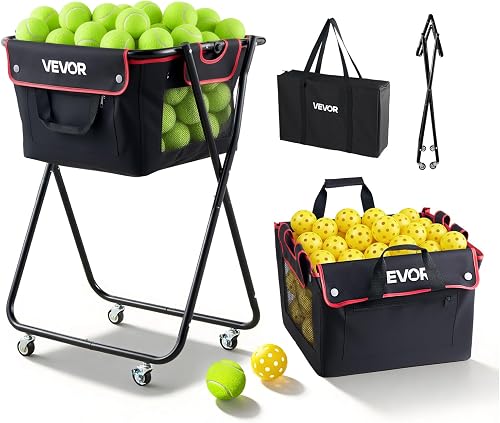
VEVOR Tennis & Pickleball Hopper Holds 200/175/150/120 Balls, 3-in-1 Tennis Foldable Pickleball Basket Cart for Easy…
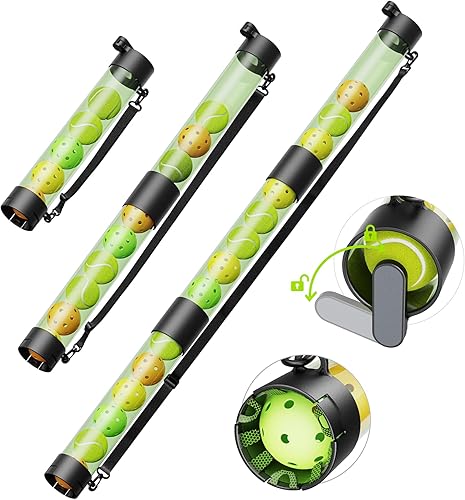
17 Balls Pickleball Ball Retriever & Ball Holder Storage with Strap, Back Saver for Pickleball Accessories, Quick for…
17 Balls Pickleball Ball Retriever & Ball Holder Storage with Strap, Back Saver for Pickleball Accessories, Quick for…

Pickleball Ball Retriever, Pickleball Picker Upper Holds 17 Balls, Pickleball Hopper with Shoulder Strap for Easy…
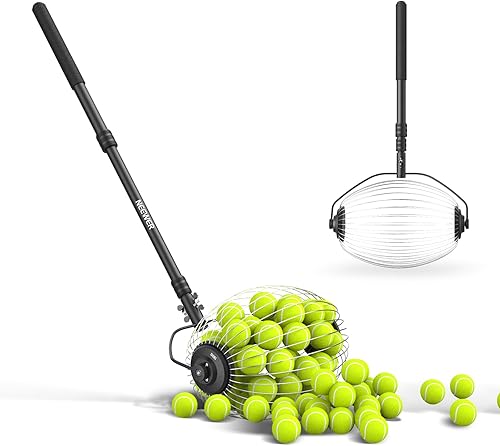
NEEWER Tennis Ball Pickleball Collector Roller, No Bending Over Quick Rolling Picker for Up to 40 Tennis Balls
PickleballPala score: combines the average rating and the number of buyer reviews on Amazon. No brand pays to be featured.
Why use a ball retriever
In a regular game there are hardly any balls to pick up, but as soon as you drill serves, dinks or volleys with a pile of balls, you end up bending over dozens of times. That repeated bend with a rounded back is exactly what you want to avoid, especially if your lower back complains or you are playing later in life (we cover that in pickleball for seniors). A retriever turns every ball into a standing motion: set it on top, press down, and the ball is in.
Types of ball retrievers
- Pickup tube: a plastic or aluminum cylinder with a flexible mouth at the bottom. Place it over a ball, push, and the ball pops in. It is light, fits in a bag and usually holds 15 to 25 balls depending on length. Great for solo practice.
- Hopper (basket with handles): a wire basket whose handles fold down into legs. Press it over a ball, the wires flex apart and trap it. Large hoppers hold several dozen balls and, with the handles up, double as a waist-high feeding stand.
- Paddle attachments: small pieces that fit on the butt of the handle and grab a ball when you touch it with the paddle. Very handy during games, though they pick up one ball at a time.
| Type | Typical capacity | Advantage | Best for |
|---|---|---|---|
| Pickup tube | 15-25 balls | Light and affordable | Solo practice |
| Hopper | 40 to 100+ | Doubles as a feeding stand | Coaches, clubs, groups |
| Paddle attachment | 1 ball | Always at hand | Games, older players |
Fit with 40-hole and 26-hole balls
A pickleball is 2.87 to 2.97 in (7.29-7.54 cm) across, noticeably bigger than a tennis ball. That is why tennis retrievers don't work: the tube mouth is too narrow and the wires in tennis hoppers are spaced closer together. Always look for "pickleball" in the title or product details.
There is another difference. Outdoor balls, with 40 holes, are harder and go in with a firm push. Indoor balls, with 26 holes, are softer and lighter, and in some tubes they squish slightly or slip out once the mouth wears. If you use both, check reviews to confirm it handles each type.
Tip: on a tube, a rubber or silicone mouth grips better than rigid plastic and holds up better to wear and cold weather.
For coaches, clubs and groups
If you teach four to eight players at once, one or two large hoppers are a must: you hand out balls quickly, players collect between drills, and the hopper sits at hand height for feeding. Make sure the legs are stable on hard courts, the handles lock firmly and the wires are coated so they won't scuff gym floors.
Common mistakes
- Buying a tennis retriever thinking it "works the same."
- Choosing a long, heavy tube if you are on the shorter side: it gets awkward to handle.
- Leaving the hopper out in sun and rain: uncoated wire rusts.
- Overfilling the tube: forcing in one ball too many stretches the mouth.
Warning: a retriever is no substitute for a warm-up. If your back feels tight, read our guide to injuries and warming up.
We compare spec sheets, the rulebook and verified reviews, but we do not physically test the products.
Frequently asked questions
Can I use a tennis ball retriever for pickleball?
Usually not. A pickleball is 2.87 to 2.97 inches across, larger than a tennis ball, so it won't fit in tennis tubes and slips between the wires of tennis hoppers. Look for pickleball-specific models.
How many balls does a pickleball retriever hold?
Pickup tubes usually hold 15 to 25 balls depending on length. Hoppers range from about 40 to more than 100. Each listing states the exact capacity.
Do retrievers work with both indoor and outdoor balls?
Harder outdoor balls go in with a firm push. Softer indoor balls can slip out of some tubes once the mouth wears. If you use both, check reviews to make sure it handles each type.
What retriever is best for a coach?
A large hopper with fold-down handles, stable legs and coated wires. It collects, stores and doubles as a waist-high stand for feeding balls during a clinic.