If you buy through our links, Amazon pays us a small commission at no extra cost to you. That’s how we keep the site running. How we choose.
Contents
Our top 3 picks
Stock checked on October 7, 2026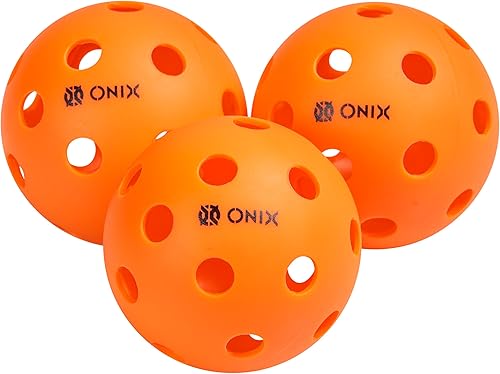


indoor pickleball balls comparison, in stock
Onix Recruit Ready‑to‑Play Indoor Pickleball Balls
cyclotron 6-Pack Pickleball Balls - USAPA Approved, 40-Hole Outdoor & Indoor Pickleballs with Mesh Bag, High-Visibility…

Warping Point Pickleball Balls | 26 Holes, 40 Holes | 4 Pack, 12 Pack | Meet USAPA Specifications | High Bounce Durable…
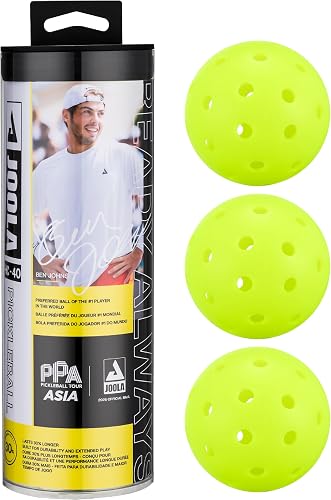
JOOLA HC-40 Hardcourt Pickleball Balls with Storage Tube - USAP Approved Balls for Tournament Play - Durable…

JOOLA HC-40 Hardcourt Pickleball Balls with Storage Tube - USAP Approved Balls for Tournament Play - Durable…

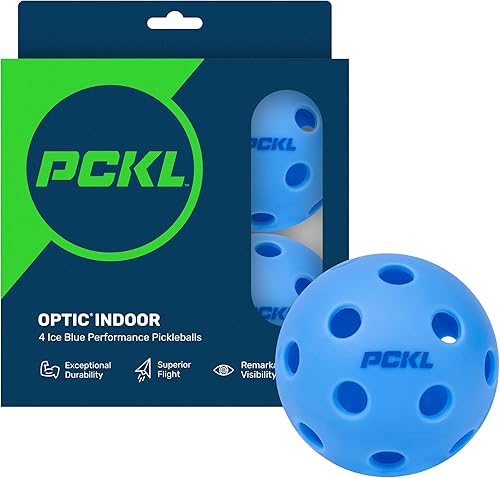
PCKL Optic Speed Pickleball Balls | Choose Indoor or Outdoor Pickleballs | USAPA Tournament Aproved | 4 Pack…
Indoor Pickleball Balls, 6/12 Pack, 26 Holes
PickleballPala score: combines the average rating and the number of buyer reviews on Amazon. No brand pays to be featured.
What makes an indoor ball different
The official specs are the same for every ball: 2.87 to 2.97 inches (7.29-7.54 cm) in diameter and 0.78 to 0.935 oz (22.1-26.5 g). What changes is the design. An indoor ball has around 26 larger holes, softer plastic and usually weighs less than an outdoor ball. It slows down sooner in the air and bounces lower and slower off the floor, so rallies last longer and the kitchen game takes center stage.
That suits gym floors, which are faster and slicker than concrete. A hard outdoor ball skids and shoots off hardwood; an indoor ball grips better and is easier to control. For a side-by-side comparison, see our guide on indoor vs outdoor pickleballs.
How to choose indoor balls
- Softness: a softer ball is quieter and more forgiving on dinks and returns, which really helps when you're starting out.
- Durability: indoor balls don't crack as often as outdoor ones, but over time they go out of round or develop soft spots. When a ball bounces oddly or caves in when you squeeze it, replace it.
- Consistent bounce: look for reviews that mention an even bounce. A clean seam is usually a sign of good manufacturing.
- Approval: if you play sanctioned indoor events, the ball must be on the USA Pickleball approved list. Brands such as Onix, Franklin, JOOLA and Gamma make indoor models.
Which surfaces and when to use them
| Situation | Recommended ball | Why |
|---|---|---|
| Gym with hardwood or sport flooring | Indoor | Controlled bounce, less skidding |
| Covered concrete or acrylic court | Indoor or outdoor, your call | No wind, both play well |
| Outdoor court | Outdoor | Indoor balls drift in the wind and wear fast |
| Beginner clinics and kids | Indoor | Slower, gives players time to reach the ball |
On covered hard courts with no wind, many clubs use outdoor balls so players get used to tournament speed. There's no fixed rule: try both and stick with the one that gives you the most enjoyable rallies.
Tip: on a light-colored gym floor, a bright orange or yellow ball is easier to see; on blue or green floors, yellow or neon green works well.
Care and durability
Indoor balls take less punishment than outdoor ones because hardwood is gentle on them and there are no big temperature swings. Still, keep them in a bag or box away from heaters and direct sun, and don't take them outside: a single afternoon on concrete scuffs them up and takes some life out of the bounce. If you play a lot, buy 6- or 12-packs and rotate them.
Heads up: don't mix indoor and outdoor balls in the same session. Each one bounces at a different speed and throws off your timing, especially on dinks and volleys.
Common mistakes when buying indoor balls
- Taking them to an outdoor court: the wind pushes them around and concrete scuffs them quickly.
- Buying without checking the listing says 26 holes: some packs mix models.
- Choosing a color that blends into the floor or the gym walls.
- Playing on with soft or out-of-round balls, which bounce lower and change how points play out.
For outdoor play, check out our outdoor balls, and if you drill with lots of balls, a ball retriever makes life easier. We compare spec sheets, the rulebook and verified reviews, but we don't physically test the products: always confirm the indoor rating on the listing.
Frequently asked questions
How many holes does an indoor pickleball have?
About 26 holes, larger than those on an outdoor ball, which has about 40. Combined with softer plastic, that makes it bounce slower and easier to control.
Can I use indoor balls outside?
You can, but it isn't a good idea: wind pushes them around easily and concrete wears them out fast. On outdoor courts, use outdoor balls.
How long do indoor pickleballs last?
It depends on how much you play, but they usually outlast outdoor balls because they crack less. Replace them when they go out of round, develop soft spots or bounce unevenly.
Are indoor balls better for beginners?
Yes, on indoor courts. They're slower and give players more time to set up, which is why they're popular in beginner clinics and with kids.


